
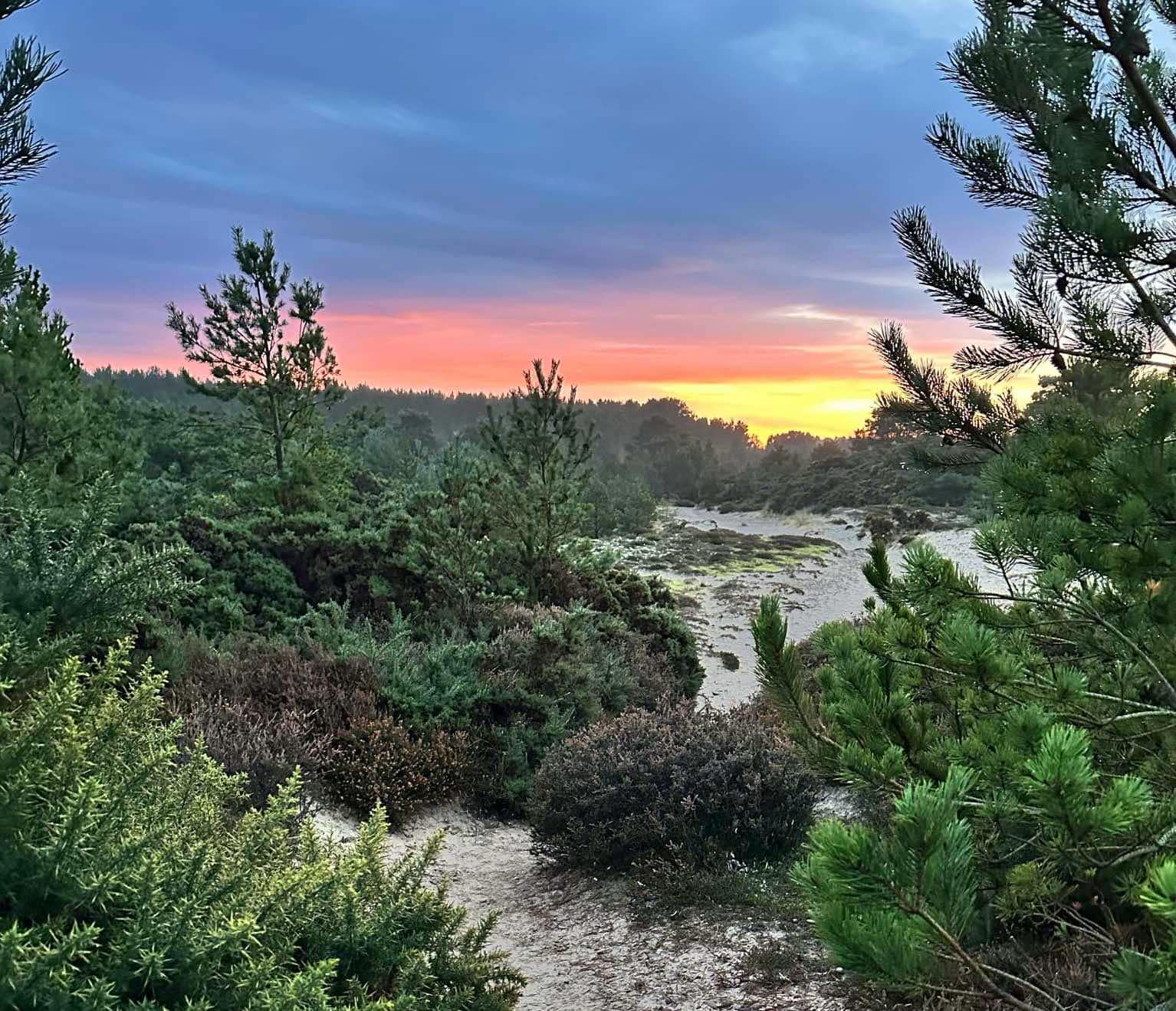
The Moray Coast Trail is one of Scotland’s most stunning long-distance walks, stretching 44 miles along the picturesque coastline of the Moray Firth. Over four days, this walk takes you through a variety of terrains, from sandy beaches and rugged clifftops to charming fishing villages and quiet forest paths. The route is well-maintained and mostly flat, with only a few gentle inclines, making it accessible to walkers of varying fitness levels.

This is my 8th long distance walk in Scotland and I found this route straightforward with good way-markers, and less demanding than others, such as the West Highland Way or the Skye Trail. That said, its beauty is no less captivating, with opportunities to spot seals and dolphins and enjoy some of the best coastal views in the UK. Whether you’re an experienced hiker or a casual walker, the Moray Coast Trail offers a fantastic way to immerse yourself in Scotland’s natural and cultural treasures.

Myself and Fin decided to tackle the Moray Coast Trail in winter, as each section is short enough to complete within the limited daylight hours. This trail also marked our first hike of 2025, and we couldn’t think of a better way to start the year than exploring this stunning coastal route.
While the trail can be enjoyed year-round, the summer months offer more favorable weather and long daylight hours, making it a sensible time to tackle th eroute. As we’re local to the area (living in Inverness), we opted to return home each evening after our walks instead of booking accommodation along the route. However, for those traveling from further afield, there’s plenty of accommodation available throughout the trail. You’ll also find a number of places to eat along the way, many of which remain open year-round.
Forres to Burghead (Day 1)
The first stretch of the walk, from Forres to Burghead, covers approximately 12.5 miles and offers a fantastic introduction to the Moray Coast Trail. Starting in the town of Forres, you pass the Benromach Distillery—a great spot to stop for a dram if you’re a whisky enthusiast. The route then takes you towards Kinloss, following the River Findhorn as it makes its way toward Findhorn. If time allows, make a stop at the Findhorn Eco Village, a unique community known for its focus on sustainable living and eco-friendly architecture. It’s a great spot to take a breather and explore the village’s green initiatives before continuing along the trail.


After this, you’ll arrive in Findhorn, home to a breathtaking expanse of golden sands and rolling dunes—our favorite part of the entire walk. This stretch of coastline is truly spectacular, offering wide open views and a sense of tranquility that’s hard to match. For those seeking a bit of adventure, there’s even a sauna available to hire here, which seems to be a popular choice for wild swimmers. You can brave a dip in the chilly waters of the Moray Firth and then warm up in the sauna—a great way to refresh before continuing on your way.

Continuing along the route, you’ll encounter a series of historic World War II blocks and pillboxes scattered along Roseisle Beach. These concrete fortifications were once part of the coastal defenses and now stand as weathered relics of the past, adding a fascinating historical touch to your walk. The trail then changes into a forest path through Roseisle, offering a sheltered and tranquil stretch before arriving in the quaint village of Burghead.


Burghead to Lossiemouth (Day 2)
The next section of the walk, from Burghead to Lossiemouth, spans 9 miles and offers some of the most memorable scenery of the entire trail. For this stretch, Fin’s mum, Marie, joined us, making it a lovely shared experience as we explored this stunning part of the coastline together.
The coastal path leading to Hopeman has well-maintained tracks and gentle sea breezes making for enjoyable walking. Hopeman itself is a charming village, known for its sandy beach and iconic row of colorful beach huts that add a splash of character to the shoreline.


As you follow the path around the coast, you’re rewarded with stunning views of Clashach Cove—undoubtedly one of the highlights of the entire walk. This is worth a short detour down to explore but please take care on the path down as it is quite steep. Continuing on, the trail transitions to cliff-top paths, offering dramatic views as you approach Lossiemouth’s West Beach.


A hidden gem along this section is Sculptor’s Cave, a fascinating site that can only be reached at low tide. The cave is steeped in history and has Pictish carvings, making it a must-see for those intrigued by Scotland’s ancient past.


Finally, you’ll reach Lossiemouth West Beach, a spectacular expanse of sand backed by dunes, with the iconic Covesea Lighthouse standing proudly in the distance. More caves await exploration here before the path leads into the coastal town of Lossiemouth. On a nice day, we’d highly recommend stopping by Miele’s of Lossie. This local favorite serves some of the best ice cream in the area, with a fantastic selection of flavors to choose from. It’s the perfect treat to enjoy while taking in the stunning views of the beach and harbor.

Lossiemouth to Buckie (Day 3)
The stretch from Lossiemouth to Buckie is the longest of the walk, covering 15.5 miles and offering a mix of mostly coastal and some inland scenery. Leaving Lossiemouth, you cross the foot bridge and follow the beach, the sand dunes to your right. This area is popular with surfers, and on a good day, you can watch them riding the impressive waves.


Not far along the route, you’ll come across more of the World War II concrete boxes and pillboxes, remnants of the coastal defences that add a historical touch to the walk. The trail then leads you over the old railway bridge spanning the mouth of the River Spey and into the charming village of Spey Bay. This is an ideal spot to pause for lunch, with fantastic opportunities for birdwatching and dolphin spotting—be sure to keep an eye out for the famous Moray Firth dolphins.

Spey Bay is home to the Dolphin Centre, which is free to visit and features informative displays about the local wildlife as well as a cosy café. Unfortunately, it was closed during our January visit, but it typically opens for the season in mid-February.
After leaving Spey Bay, the trail enters a wooded area, which can be challenging in winter. Following a few nights of heavy rain, we found this section of the path completely flooded, with water reaching up to our knees in places. With no diversion in place, we pressed on, laughing at the unexpected adventure as we waded through the water. This is one of the quirks of walking the trail in winter, but it didn’t dampen our spirits. We were relieved to reach the end of the wooded area and rejoin a drier track, which led us onward to the coastal town of Buckie, marking the end of this memorable leg of the journey.
Buckie to Cullen (Day 4)

The final leg of the Moray Coast Trail, from Buckie to Cullen, is a 7.5-mile stretch that beautifully rounds off this coastal adventure. Starting with a road east from Buckie, the route quickly transitions into an exceptional cliff-top path, offering breathtaking views of the coast.


This section links the charming former fishing villages of Findochty and Portknockie, both of which are perfect spots to pause for lunch and take in the surrounding scenery. The highlight of this stretch is undoubtedly the visit to Bow Fiddle Rock, a dramatic natural sea arch that resembles the tip of a fiddle bow. It’s one of the most iconic landmarks along the trail and a fantastic spot for photographs.

From here, the walk descends to a fine sandy beach, leading you into the picturesque village of Cullen. Cullen itself is a delightful place to finish, known for its brightly colored houses, Cullen Viaduct and, of course, the famous Cullen Skink—a must-try if you’re in the mood for a hearty bowl of soup.


In conclusion, we thoroughly enjoyed the Moray Coast Trail and found it to be a very manageable walk, with relatively few challenges along the way—apart from the ‘swamp’ section we had to wade through!
The trail offers a perfect balance of coastal beauty and historical interest, making it a rewarding experience for walkers of all abilities. For those who prefer a slower pace, the walk can be made longer by breaking up the two longer sections, with Findhorn and Spey Bay providing ideal spots to add as extra stops. Alternatively, for those looking to shorten the journey, it’s possible to combine some of the days. Whatever your preference, the Moray Coastal Trail is an accessible and enjoyable way to experience Scotland’s stunning coastline.


Leave a Reply