
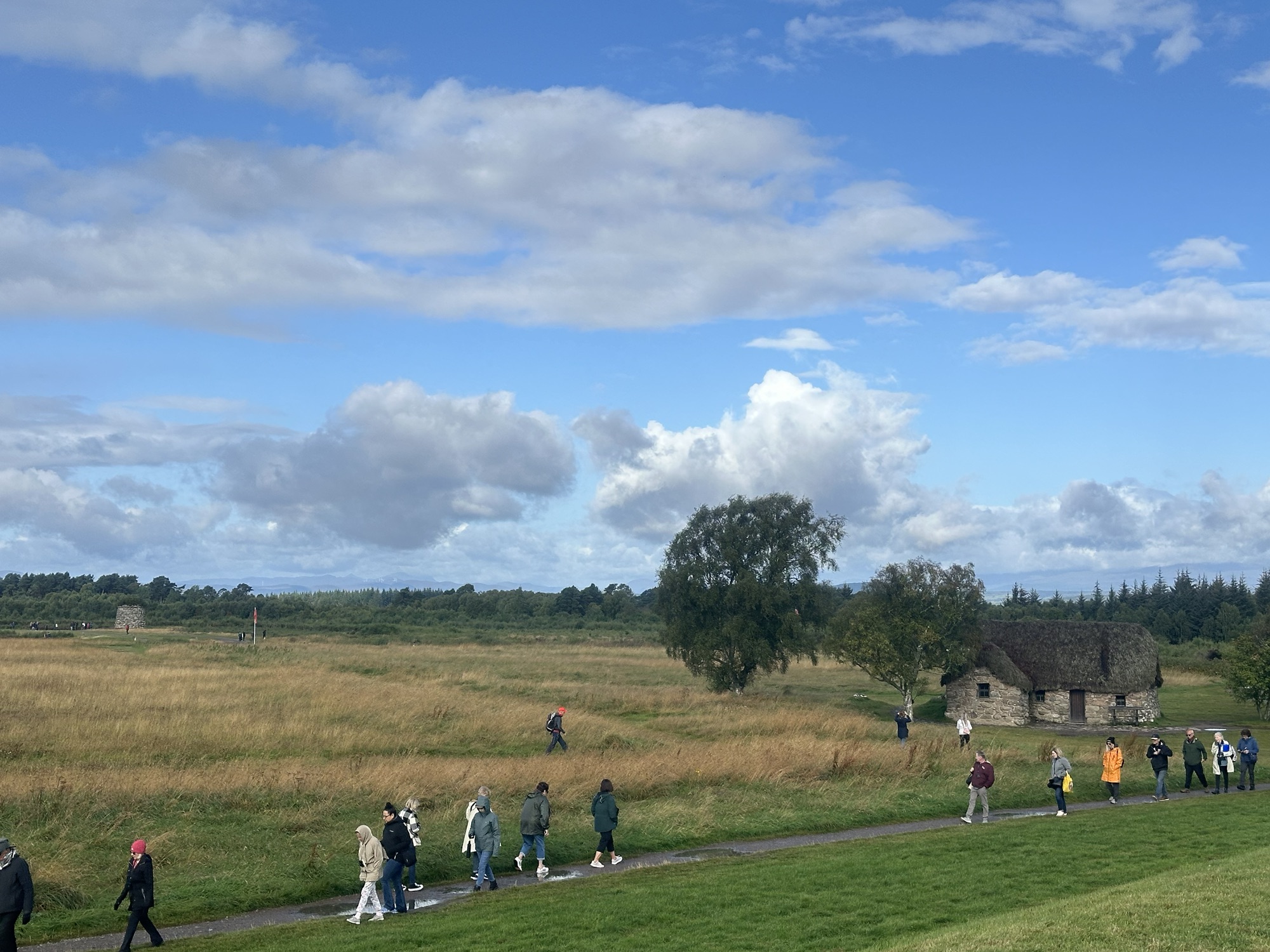
The Battle of Culloden, fought on April 16, 1746, was a turning point in Scottish history. This brief but brutal confrontation between the Jacobite forces of Bonnie Prince Charlie and the British Army, led by the Duke of Cumberland, marked the end of the Jacobite Rising and the last pitched battle on British soil. For many, Culloden is a symbol of both tragedy and resilience, a battle whose aftermath reshaped the Highlands and altered Scottish history forever.
But behind the famous historical moments lie the lesser-known, human stories—of courage, exhaustion, and heartbreak. Here are five lessor-known tales from the night before and the day of the battle that cast a more intimate light on the events of Culloden.

1. The Fateful Night March: A Lost Opportunity in the Dark
On the eve of the Battle of Culloden, Bonnie Prince Charlie and his commanders hatched a daring plan. Rather than wait for Cumberland’s forces to engage them in open battle the following day, the Jacobites planned a night assault. The British army, camped at Nairn a few miles away, was celebrating the Duke of Cumberland’s 25th birthday. It was widely believed that his soldiers would be tired and perhaps a little drunk, offering the Jacobites the chance to launch a surprise attack and gain the upper hand.
Under the cover of darkness, the Jacobites set out to sneak up on the British camp. However, this bold plan quickly went awry. The Highlanders, many of whom were already starving and exhausted, struggled to navigate the dense moors and uneven terrain in the pitch-black night. The march descended into confusion. Men became disoriented, losing their way as they stumbled through the boggy ground. The commanders tried to regroup, but the army was hopelessly scattered, and the element of surprise had slipped from their grasp.
By the early hours of the morning, the decision was made to abandon the attack. The Jacobite forces returned to their camp at Culloden Moor, tired, demoralised, and utterly drained. They would face the British the next day not only under unfavourable conditions but also without the benefit of rest or food. The failed night march is one of the most poignant “what-ifs” of the battle. If the Jacobites had managed to launch their surprise attack, perhaps the history of the Highlands would have been very different.

2. Chief MacGillivray’s Last Act of Humanity
Amid the chaos of Culloden’s final moments, one story of nobility and compassion stands out: the tale of Chief Alexander MacGillivray of the Clan MacGillivray. A leader of the clan Chatton, MacGillivray and his men participated in the iconic Highland charge, a ferocious rush toward the British lines that had proven decisive in earlier battles. However, Culloden was different.
The wet, marshy ground of Culloden Moor turned the Highlanders’ charge into a disaster. The men, traditionally known for their speed and ferocity, found themselves struggling through thick mud, their momentum sapped by the unforgiving terrain. British artillery and muskets tore into the advancing Jacobites, decimating their ranks before they could reach the enemy lines. Despite the overwhelming odds, Chief MacGillivray led his clan forward, determined to make a final stand.
In the midst of the bloodshed, MacGillivray was mortally wounded. As he lay dying on the battlefield, he noticed a young drummer boy, also gravely injured and left behind by his comrades. Though he could have left the boy to die, MacGillivray’s sense of compassion prevailed. In an act of humanity, he gathered the boy and led him, slowly and painfully, toward a nearby well. Both wounded and weak, MacGillivray made sure the boy had a chance to drink, offering him comfort in his final moments.
Sadly, neither would survive. Both MacGillivray and the young drummer succumbed to their wounds beside the well, a tragic yet powerful symbol of the shared humanity amid the brutality of war. Today, a simple stone marker stands at the site, commemorating the chief’s final moments. It serves as a reminder that even in the face of inevitable defeat, dignity and compassion endured.

3. The Sleeping Jacobites Who Missed the Battle Call
While the Jacobite forces were preparing for battle on the morning of April 16, 1746, not all of their soldiers were ready when the fighting began. After the failed night march and the exhausting return to camp, many Jacobite soldiers, worn out from hunger and fatigue, fell into deep sleep on the cold, wet ground of Culloden Moor.
When the British army began advancing, and the alarm was raised, many Jacobites didn’t even hear the battle call. Their exhaustion was so profound that they slept through the initial chaos. Others, who had fallen asleep at the edges of the camp or too far from the main muster, woke up disoriented, realising too late that the battle had already begun.
These sleeping Jacobites, some of whom had fought valiantly in earlier battles of the Rising, found themselves unable to contribute in the final, fateful clash. Their absence from the initial stages of the fight further weakened the already depleted and disorganised Jacobite army. The confusion and exhaustion that plagued the Jacobite forces, combined with the failure to rouse all their men in time, contributed to the devastating defeat they would suffer later that day.

4. The Highland Charge: Sunk in the Bog
The Highland charge was one of the Jacobite army’s most feared and effective tactics, a ferocious rush of sword-wielding warriors that had overwhelmed British troops in earlier engagements like the Battle of Prestonpans. The sight of Highlanders bearing down at full speed, swords raised high, was enough to break even the most disciplined lines.
At Culloden, however, the Highlanders faced an enemy far more formidable than Cumberland’s infantry—Culloden Moor itself. The land had been drenched by days of rain, and the battlefield was a thick, treacherous bog. As the Highlanders launched their charge, the mud clung to their feet and slowed their progress to a painful crawl. What was meant to be a rapid, crushing assault turned into a sluggish, disjointed advance.
British artillery, positioned on higher, drier ground, pounded the Jacobites with round after round of grapeshot. Before the Highlanders could even close the distance, they were being ripped apart by cannon fire and musket volleys. The charge, which had been their greatest weapon, was nullified by the boggy ground beneath them.
By the time the Jacobites reached the British lines, many had already fallen, and those who remained were exhausted from their struggle through the mud. The Highland charge, once their key to victory, was now a symbol of the futility of their situation.

5. “No Quarter”: The Ruthlessness of the Duke of Cumberland
The battle was a crushing defeat for the Jacobites, but the aftermath was even more brutal. The Duke of Cumberland, commanding the British forces, had issued strict orders before the battle: “No quarter” was to be given to any Jacobite soldiers. This meant that any rebel fighters who were captured or surrendered were to be executed without mercy.
As the British troops swept across the battlefield in the hours and days that followed, they carried out these orders with ruthless efficiency. Wounded Jacobites lying on the ground were bayoneted where they fell. Those who attempted to flee were hunted down and killed. The cries for mercy went unheeded as Cumberland’s forces systematically eliminated any survivors.
Cumberland’s orders earned him the nickname “Butcher Cumberland” among the Scots. His brutal approach extended beyond the battlefield. In the weeks following the battle, British forces roamed the Highlands, burning homes, seizing livestock, and rounding up suspected Jacobite sympathizers. Many Highlanders who had not even fought at Culloden were imprisoned or executed. The goal was clear: to break the power of the clans and crush any future resistance.
The harsh policies that followed Culloden effectively dismantled the Highland way of life. The wearing of tartan and the bearing of arms were outlawed, and the traditional clan system was systematically destroyed. But despite the brutality of Cumberland’s campaign, the spirit of the Highlands would endure, their story becoming an enduring symbol of resistance and resilience.

A Legacy of Tragedy and Honor
The Battle of Culloden was not just a military defeat—it marked the end of a way of life in the Scottish Highlands. From the botched night march to the last act of compassion by Chief MacGillivray, the human stories that emerged from Culloden remind us that history is shaped not just by strategies and outcomes, but by the people who live through its most harrowing moments.
Today, Culloden Moor is a somber reminder of the cost of war, a place where the names of clans, both victors and vanquished, are carved into stone. It serves as a lasting testament to the courage, tragedy, and humanity of those who fought and fell on that fateful day.

We offer private group tours to the most captivating sites around Inverness and Invergordon, departing from either location. Explore the rich history and breathtaking landscapes of the Scottish Highlands at your own pace. For more details on our tailored tours, click here.


Leave a Reply